Pittenweem
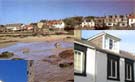
 Pittenweem is located in the East Neuk of Fife between Anstruther and St Monans. It grew as a busy fishing port and today is a busy mix of locals , holiday cottages and fishing community. Pittenweem is located in the East Neuk of Fife between Anstruther and St Monans. It grew as a busy fishing port and today is a busy mix of locals , holiday cottages and fishing community.
Created a royal burgh in 1541many of its buildings date from the 16th and 17th centuries and have been restored by the National Trust for Scotland. Kelly Lodging in the High Street dates mainly from the late 16th century and was the town residence of the Earls of Kellie. The Augustinian Priory moved here from the Isle of
May in the 13th century, and the remains of its church are incorporated in the present parish church which incorporated the Tolbooth Tower of 1588. The monastic buildings partly survive, the 15th century gatehouse, the dormitory and the Great House, and the Priors Lodging, remodelled as the rectory in 1840.

There is a cave associated with St Fillan.Giving its name to Pittenweem, Pit meaning place and weem meaning a cave, St Fillan's cave has a important link to the Church and history as a whole. Entrance to the Cave is reached from Cove Wynd, the top of which is approached from the East end of the High Street and comes out at the East end of the harbour. In the 7th century the cave was reached by boat as at this time the harbour did not exist and was no doubt a favourite place for smugglers.

Pittenweem is still an attractive village and worth a visit when village hopping in the East Neuk.It is ideally located for easy trips to St Andrews, Dunfermline, Culross, Perth, Edinburgh, Falkland Palace, and all of historic Fife.
Scotland was described by James VI as 'a beggar's mantle fringed with gold' - the gold being the chain of little Fife ports from which merchant ships, smuggling vessels and fishing fleets plied their trade over the centuries. Again, Pittenweem is most definitely part of that beautiful gold chain.
Return to Castaway Cottage Home Page
|